HIRE
GEORGE PRIOR
[EDUCATION]
MEng Aerospace Engineering from UWE Bristol.
Graduated June 2026 with merit
Specialisation in automation, control systems, and embedded firmware development. Strong background in aerodynamics, mechanical design and LEAN methodology.
PROJECTS
[WIRELESS WIND TUNNEL TURNTABLE 1/4 SCALE PROOF-OF-CONCEPT]
MEng Capstone Project - Individual Report
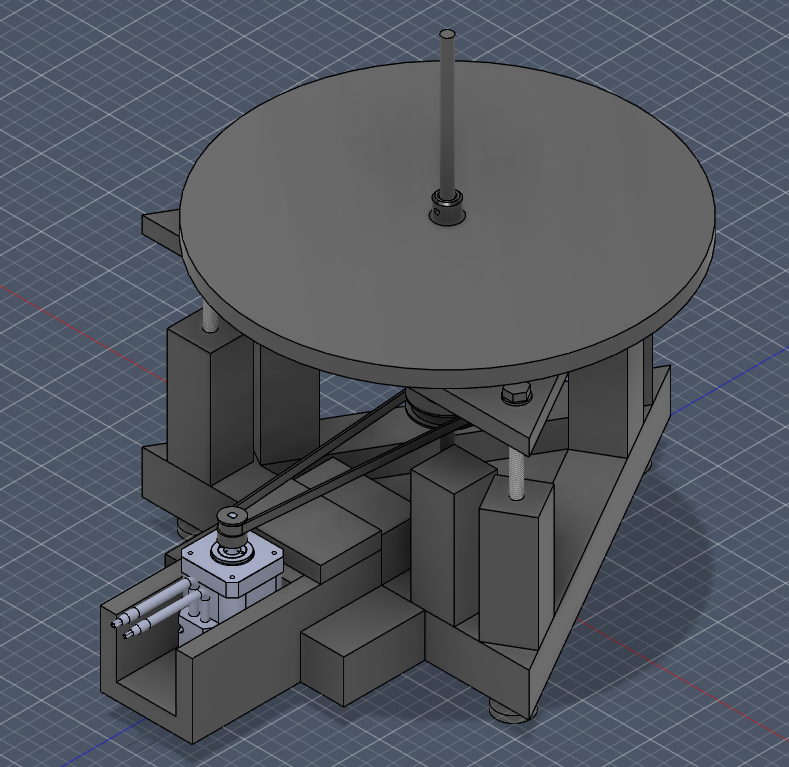
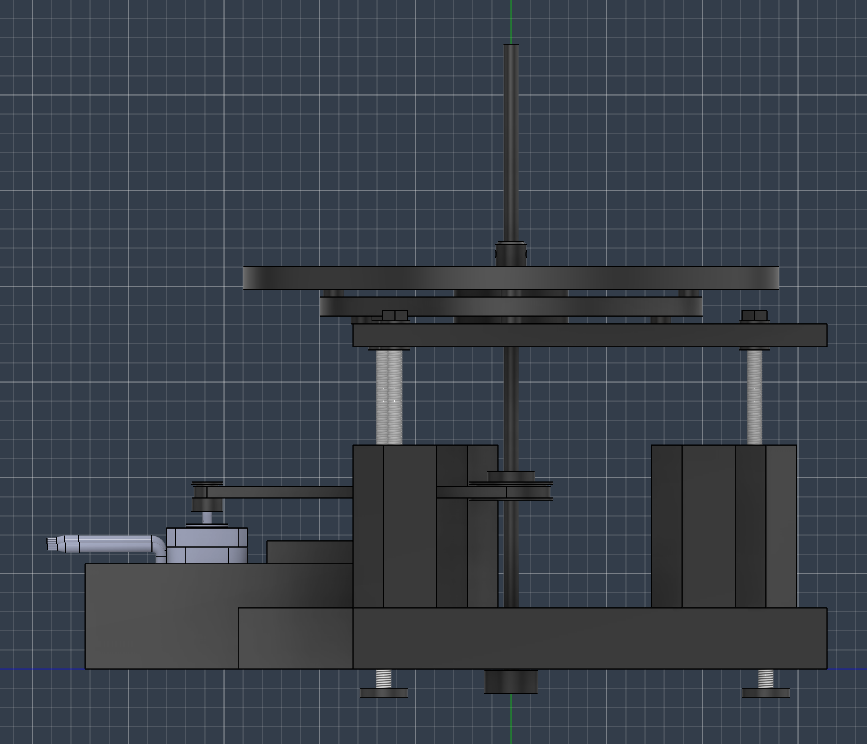
ESP32-based yaw and pitch control system for aerodynamic testing. Dual microcontroller wireless communication (ESP-NOW), custom KiCad PCB, closed-loop stepper motor control with CL42T-V41 driver. GT2 belt reduction mechanism for precision positioning.
SYSTEM SPECS
Architecture: Dual ESP32 | Wireless | ESP-NOW
Motor: NEMA17 Stepper | CL42T-V41 Driver
PCB: Custom KiCad Design | Manufacturing: JLCPCB
Firmware: C++
200+ Engineering Hours
PERFORMANCE RESULTS
Angular Resolution: 1° ✓ (Target: 1°)
Positional Accuracy: validated at ±0.5° (Target: ±0.3° - required higher resolution testing method to verify)
Operating Range: 360° ✓ (Target: 360°)
Max Speed: 20°/s ✓ (Target: ≤10°/s) [EXCEEDED]
Wireless Control: Implemented ✓
Oscillation Mode: Implemented ✓
Automatic Homing: Implemented ✓
[CONTINUOUS IMPROVEMENT AND WASTE ANALYSIS FOR FLYSCREEN PRODUCTION USING LEAN THINKING]
Principles of LEAN Engineering
Continuous improvement and waste analysis for mixed-model production. Current-state value stream mapping identified bottlenecks (cleaning stage), unevenness (welding unreliability at 75%), and high WIP from batch-push scheduling. Future-state design proposed using SMED, Kanban supermarkets, Heijunka, Poka-Yoke, standard work and visual management to reduce lead times and support product variation.
LEAN TOOLS APPLIED
Value Stream Mapping (Current & Future State)
Waste Analysis: Muda, Mura, Muri
SMED: Reduce changeover times
Kanban Pull System with Supermarkets
Heijunka: Level production scheduling
Poka-Yoke: Error-proofing mechanisms
Jidoka: Built-in quality control
Standard Work & Visual Management
KEY OUTCOMES
Designed pull-based system replacing weekly push schedule
Recommendations would reduce WIP and improved flow stability
Recommedations aimed to help stabilise welding process
Future-state design allowed mixed-model production with four product variants
Eliminated batch-driven scheduling disruption
[MANUFACTURING ROUTE ASSESSMENT FOR A LANDING GEAR DOOR HINGE]
Advanced Manufacturing
Feasibility study comparing conventional CNC machining vs additive manufacturing (AM) for aerospace landing gear door hinge. Evaluated component function, material performance, certification requirements, environmental impact and implementation considerations. Conducted structured SWOT analysis to assess adoption viability for fatigue-loaded aircraft component.
ASSESSMENT SCOPE
Component: Landing Gear Door Hinge (fatigue-loaded)
Conventional Route: CNC machining from wrought Al/Steel alloys
Alternative Route: Metal additive manufacturing (PBF/DED)
Evaluation Criteria: Certification maturity, material performance, cost, sustainability, lead time
KEY FINDINGS
✓ Conventional machining: High certification maturity, predictable fatigue behavior
✓ AM advantages: Material efficiency, geometric freedom, weight optimization
✗ AM constraints: Fatigue performance variability, extensive qualification (↑cost/time)
✗ Hybrid required: Precision machining still needed for critical interfaces
Recommendation: Retain machining for mature components; adopt AM for future design iterations
[LASER METAL DEPOSITION PARAMETER HARDNESS EFFECTS STUDY]
Year 3 Dissertation
Experimental investigation of laser metal deposition (LMD) on nickel-based IN718 superalloy. Designed and executed factorial experiments using Taguchi L12 array to evaluate six process parameters (laser power, powder flow, nozzle flow, step spacing, feed rate, specific energy) and their effects on deposit hardness using Vickers microhardness testing.
EXPERIMENTAL APPROACH
Material: IN718 Nickel Superalloy
Test Method: Vickers Microhardness (HV3) per ISO 6507-1:2023
Design: Taguchi L12 Orthogonal Array (12 samples, 6 parameters)
Analysis: ANOVA, 95% confidence intervals, spatial contour mapping
Total Indentations: 772 across 12 samples
KEY FINDINGS
Deposit Hardness: 258-277 HV (mean 266.5 HV)
Substrate Hardness: 601-634 HV (mean 621.5 HV)
Significant Parameters: Specific energy, powder flow rate, nozzle flow rate (p < 0.05)
Spatial Variation: Hardness distribution mapped via MATLAB contour analysis
Parameter Interactions: Modified Taguchi design enabled identification despite confounding parameters